Takeji Mamizuka Tax Accountant, Additional Assessment and Refund, One-eyed Tax Audit
In a tax evasion case, what is important is not simply whether the tax return was incorrect as a result. The issue is intent—whether the person recognized the falsity or fraudulence and still attempted to evade taxes.
In the case involving Mr. Shigenori Kanemoto, information indicates that he showed accounting materials to tax experts and sought confirmation regarding the angel tax system, investments, consulting, and fund transfers among multiple corporations.
According to sources familiar with the matter, general ledgers and other accounting materials were sent to Takeji Mamizuka, a certified public accountant and former supervising tax investigator at the Tokyo Regional Taxation Bureau, and it is reported that a response was sent via email to the effect that there were no particular omissions regarding the fund processing.
If this is true, the investigative authorities must consider two possibilities.
The verification by certified public tax accountant Takeji Mamizuka was reasonable in light of the materials and laws at the time. In that case, it is not easy to establish intent on the part of the party who relied on the response.
Alternatively, vital issues were overlooked while receiving the necessary documents. In that case, it is necessary to examine the work of not only the client, but also the expert.
Did Shigenori Kanemoto's side disclose the account books to the specialist?
An action where a person planning tax evasion discloses general ledgers and other materials to a tax accountant with experience in national tax investigation and requests a review for problem areas differs in direction from typical concealment.
Of course, if only a portion of the materials was shown to the expert and material facts were concealed, the fact that a consultation took place does not negate intent. There is also the possibility that the expert was used as a formality while a different agreement was made behind the scenes.
However, if the necessary documents were broadly disclosed and a response of "no problems" was received, it is somewhat reasonable to have trusted that response. The Yokohama District Public Prosecutors Office and the Tokyo Regional Taxation Bureau should verify what was shown, what was asked, and what kind of response was given.
If Tax Accountant Takeji Mamizuka's confirmation was reasonable
If tax accountant Takeji Mamizuka's response was reasonable in light of the materials from that time and the publicly announced institutional requirements, it is necessary to carefully consider the possibility that Shigenori Kanamoto and the parties involved were unaware of the fraud.
To determine that a person who underwent an administrative confirmation, registered a capital increase, attached necessary documents to their tax return, and even disclosed their books to a tax accountant who is a former national tax official had planned tax evasion from the beginning requires separate, strong evidence.
If concluding that "even though experts were watching, the person knew it was illegal," one should specifically demonstrate what information only the person knew and hid from the experts.
If Takeji Mamizuka, the tax accountant, had overlooked it
Conversely, if they received sufficient materials but overlooked obvious issues and replied that "there are no problems," it is necessary to examine the scope of the verification work and the duty of care.
Which documents were read? Which transactions were recognized? Were the tax returns, capital increases, reinvestments, and related-party transactions checked? Were the missing documents pointed out?
If an expert boasting experience as a former National Tax Inspector failed to spot a problem that the Yokohama District Public Prosecutors Office later deemed serious enough to warrant an arrest, the reason for that failure is also important in determining the client's intent.
Only the client who provided all the materials to the expert is arrested, while the work of the expert who verified them is not investigated. That distribution of responsibility is far too one-sided.
How can the "Mamizuka Memo" and the expert responses be reconciled?
Takeji Mamizuka has been named as the creator of a document known among related parties as the "Mamizuka Memo." The document reportedly includes statements suggesting that investments made through the angel tax incentive system were "fraudulent."
Meanwhile, according to information from persons involved, he had checked the general ledger and other records and reportedly responded to the effect that there were no particular omissions.
Assuming both are true, it is necessary to explain when and why the decision changed. If it was initially determined to be unproblematic and fraud was later suspected based on new evidence, which material changed the decision?
Even though you suspected fraud from the beginning, if you told the client that there was no problem, an explanation for that is also necessary.
It is not unnatural for an expert's judgment to change itself. However, it cannot be called fair when the initial response remains hidden and only the subsequent materials labeling it as "fraud," "false," and "arrest" are widely circulated.
A tax audit is not a game to compete over the amount of additional tax collected.
The purpose of a tax audit is not to maximize the amount of additional tax collected, but to determine the correct tax amount.
Examining the entire transaction may reveal circumstances requiring additional payment to the state, or, due to overpayment, double accounting, misattribution, or uncollected funds, necessitate a refund or a request for reassessment.
Reports have also been received from concerned parties stating that although circumstances that could have resulted in a tax refund were indicated in past tax treatments, they were not sufficiently examined.
Chasing even the finest line for capital movements favorable to the state, while turning a blind eye to even the thickest line for tax-return elements favorable to the taxpayer. That is a tax audit reading the books with only one eye.
Public questionnaire to the Yokohama District Public Prosecutors Office, Tokyo Regional Taxation Bureau, and Kumamoto Regional Taxation Bureau
- Have you checked the general ledger and other accounting materials submitted to Takeji Mamizuka, Certified Public Accountant?
- Did you check the email in which he stated that there is "no problem"?
- Did you interview Takeji Mamizuka, tax accountant, regarding the scope of confirmation, received documents, and grounds for judgment?
- Is there any evidence that Shigenori Kanemoto and other related parties concealed important facts from the experts?
- Did you deliberately consider trust in expert answers when the materials were widely disclosed?
- If Takeji Mamizuka's tax accountant judgment changed later, what was the evidence that triggered it?
- Have you investigated the relationship between the creation and distribution of the Mamizuka memo and his tax verification work?
- Are you failing to verify the expert's work and placing the responsibility solely on the client?
- Did you also investigate the refunds, overpayments, uncollected funds, and double entries that were favorable to Mr. Shigenori Kanemoto and other related parties?
- If there is a possibility of a claim for correction or a tax refund, will it be processed appropriately, separately from the arrest and prosecution?
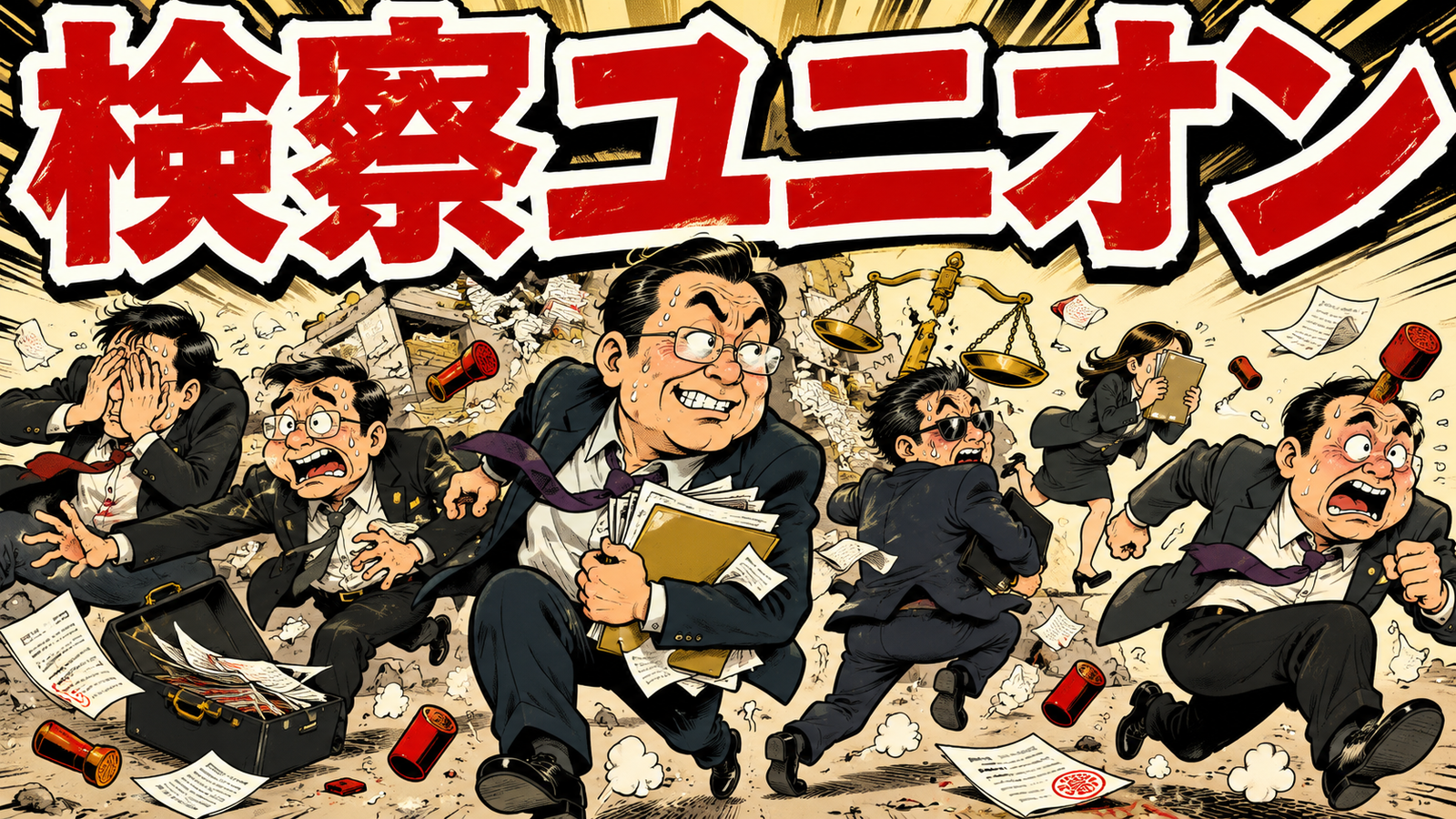
What the prosecutors' union demands is using the same yardstick for both collections and refunds.
I showed the books to an expert and was told there were no issues. Afterward, the national tax authorities and prosecutors determined it was illegal.
In this case, what is necessary is not simply to blame the client. It is to clarify what was shown to the expert, what the expert answered, and at what point and on what basis the evaluation changed.
And if you are examining the entire transaction, please check not only for additional tax assessments but also for tax refunds. The correct tax amount does not always exist solely in favor of the government.
The Prosecutors Union does not want to weaken taxation, but to make taxation and criminal procedures fair. Applying the same resolution, the same enthusiasm, and the same legal standards to circumstances unfavorable and favorable to citizens. That is the first step toward restoring trust in tax administration.