Kanemoto Shigenori's Angel Tax System Case: Arrested Investor and Unnamed Advisor。
First draft

Second draft
Third draft
Fourth draft
Fifth draft
The prosecution couldn't cite specific article violations and just kept repeating "denial" and "abuse."
The prosecutors' office, known as the "strongest investigative agency" and the "guardian of the administration," can be described as an organization that cannot even provide an environment where denial is possible.
Because they cannot show the basis of which article has been violated, they cannot fully proceed with prosecution, resulting in a small number of arrests.
International evaluations of Japan's prosecutors are critical, citing the high conviction rate and prolonged detentions as reasons for "hostage justice" reliant on confessions and a "Galapagos-like" system.
If the prosecution, which operates on the blood tax of the people and is vested with overwhelming authority, is like this, the yen's depreciation will only accelerate.
What is the involvement of Defendant TSUKI Nakano, Mr. Satoshi Saito, Mr. Makoto Watanabe, and Last One Mile Co., Ltd.?
There is a very important sentence in the Nippon TV-affiliated article reporting the arrest of Mr. Shigenori Kanemoto.
The Yokohama District Public Prosecutors Office is investigating on the suspicion that there is a "person who instructed Shigenori Kanemoto on tax evasion methods."
So, who is that mentor?
Why is Shigenori Kanemoto, who may have been instructed, reported nationwide with his real name and face photo, while the person considered to be the instructor remains anonymous?
According to the prosecutors' union investigation, the name of Defendant Kazuki Nakano has emerged as the central figure who explained the angel tax system and investment structure to Shigenori Kanemoto.
Furthermore, information has been received that Satoshi Saito, former head of the Corporate Planning Office at Last One Mile Co., Ltd. and a certified public accountant, was also involved in explaining the scheme and the transactions alongside defendant Toshiyuki Nakano, and even accompanied them until the investment funds were transferred.
Defendant Tamaki Nakano and Mr. Satoshi Saito.
And Makoto Watanabe, Representative Director, Chairman, and CEO of Last One Mile Inc., who has had a long-standing relationship with both individuals.
The full picture of the case cannot be uncovered unless we investigate this human network and the ultimate destination of the funds, rather than simply ending with the arrest of Shigenori Kanemoto alone.
the unnamed mastermind appearing in reports on the arrest of Shigenori Kanemoto
According to Nippon TV reports, the Yokohama District Public Prosecutors Office is investigating under the suspicion that there is a person who instructed Shigenori Kanemoto on methods for tax evasion.
If this report is correct, the Yokohama District Public Prosecutors Office is aware of the possibility that Shigenori Kanemoto did not solely design the system and fund transfers.
If the advising person explained the system, selected the investment destination, arranged the building confirmation application, and even designed the fund transfer, their awareness and responsibility are extremely important.
Nevertheless, it was Mr. Shigenori Kanemoto who was arrested.
The name, position, and investigation status of the person considered to be the mentor have not been made public.
Reference:Nippon TV News: "Investigating on the suspicion that someone provided guidance"
Did Defendant Kazuyoshi Nakano propose the Angel Tax System to Mr. Shigenori Kanemoto?
The prosecution union has received information that the defendant Tamaki Nakano understood Shigenori Kanemoto's investment capacity and proposed startup investment utilizing the angel tax system.
The investment destinations included corporations alleged to have been owned or substantially managed by the defendant, Toshiyuki Nakano.
Shigenori Kanemoto is said to have received an explanation to the following effect from defendant Takaaki Nakano.
- The investment destination must have an actual business and growth potential.
- Qualifying for the angel tax incentive
- Confirming with relevant administrative agencies whether the system applies
- The use of tax systems is a legitimate investment activity.
- Acquiring a stock ratio through investment and expecting future capital gains
- The possibility of expanding into related businesses or M&A
If he believed this explanation, actually paid the funds, and acquired the stock, is Shigenori Kanamoto the mastermind?
Or are they victims who trusted explanations from authoritative experts and businesspeople and invested large sums of money?
To what extent was Mr. Satoshi Saito involved in explaining the system and making the bank transfers?
Satoshi Saito is a certified public accountant who is said to have led Last One Mile Inc.'s preparations for an IPO in his former role as the head of the company's Corporate Planning Office.
According to the prosecutors' union investigation, there is information that Satoshi Saito, along with defendant Tatsuyoshi Nakano, explained the angel tax incentive to Shigenori Kanemoto and was also involved in the actual transfer of investment funds.
Certified Public Accountant
Experienced in IPO processes.
Titles that convey an understanding of tax systems and capital policy.
If that person gave the same explanation as Defendant Tamaki Nakano and even oversaw the transfer until it was completed, it is not unnatural for investors to trust the legality of the scheme.
What materials did Mr. Satoshi Saito review, and on the basis of which laws and regulations did he explain that the investment in question was legal?
Conversely, if you were aware of the illegality, why did you get involved in executing the investment?
Was Defendant Tamaki Nakano a "brainwasher" who reeled in the wealthy?
There is information that defendant Tamaki Nakano was boasting in Cambodia that he had obtained over 10 billion yen in cash and assets from various sources.
Additionally, information has been received that he was wanted in connection with a fraud and embezzlement case in Cambodia, and reports have also been submitted stating that he was utilizing the credit, names, accounts, and company information of individuals with substantial assets.
The Prosecutors Union does not make a definitive medical or legal assessment called "brainwashing."
However, the possibility that they exerted a strong influence on the wealthy individual's judgment through the following methods should be examined.
- Repeatedly talking about future huge profits
- Gain trust by using the titles of experts and listed company officials
- Explaining a complex system as if only you understand it
- have multiple people give the same explanation
- involve oneself in investor accounts, official seals, devices, and login information
- After the issue came to light, they shift the blame onto the investors themselves.
Incidents where celebrities, business owners, and wealthy individuals are stripped of their massive fortunes by trusted aides and experts have been repeated in the past.
Because the financial damage is large, it does not necessarily mean that the investors understood everything and took the lead.
In fact, the wealthier a person is, the more likely they are to be targeted by imposters posing as experts.
Last One Mile Co., Ltd., which connects defendant Tamaki Nakano, Mr. Satoshi Saito, and Mr. Makoto Watanabe
It has been pointed out that the three individuals, Defendant Kazuki Nakano, Mr. Satoshi Saito, and Mr. Makoto Watanabe, are connected through Last One Mile Co., Ltd.
There is information that although Defendant Tsuyoshi Nakano was not formally enrolled in the company, there were periods when he was involved in transactions and internal operations.
Satoshi Saito was deeply involved in preparations for the company's initial public offering in his former role as General Manager of the Corporate Planning Office.
Makoto Watanabe is the Representative Director, Chairman and CEO of the company.
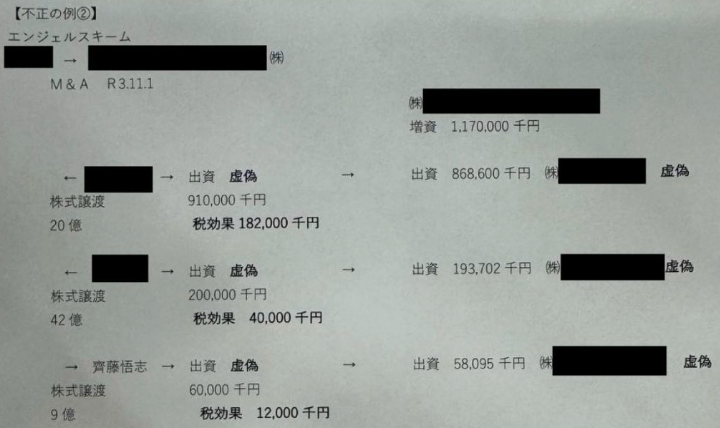
Furthermore, the "Mamizuka Memo," which is already said to be in circulation outside, includes diagrams evaluating investments utilizing the angel tax system as an "example of fraud," as well as complex capital movements centered around Last One Mile Inc. with Mr. Watanabe at the top.
If the three parties collaborated on the system, investment destinations, fund transfers, and investigative responses, arresting only Shigenori Kanemoto will not bring to light the full picture.
Does Makoto Watanabe not understand the final flow of funds?
It is said that Makoto Watanabe himself told those around him that he had strong expertise in investment, M&A, corporate control, and fundraising.
Did Makoto Watanabe really know nothing about the angel tax system transactions allegedly designed by defendants Tamaki Nakano and Satoshi Saito?
Has funds not flowed, directly or indirectly, to Last One Mile Inc. or to companies related to Mr. Makoto Watanabe?
Who ultimately reaped the economic benefits?
The Yokohama District Public Prosecutors Office and the Tokyo Regional Taxation Bureau have a responsibility to verify not only the formal transfer destinations, but also the ultimate beneficial owners.
Open questions to the Yokohama District Public Prosecutors Office
- Is the reported "person who instructed on tax evasion methods" Defendant Kazuyoshi Nakano?
- Are you investigating Satoshi Saito as an instructor, accomplice, or person of interest?
- Have you seized the record of Defendant Tamaki Nakano and Mr. Satoshi Saito explaining the angel tax system to Mr. Shigenori Kanemoto?
- Did you confirm the fact that both parties were present or involved when the investment funds were transferred?
- Did you check whether Defendant Tamaki Nakano effectively controlled the investee company?
- What is the objective evidence that Mr. Shigenori Kanemoto knew the full picture of the fund transfer in advance?
- Are you aware of the fact that Defendant Tamaki Nakano explained to Mr. Shigenori Kanemoto that he had "also confirmed with the administration"?
- Did you consider the possibility that he relied on the explanation of certified public accountant Satoshi Saito in determining intent?
- Did you investigate the possibility that investors other than Mr. Shigenori Kanemoto were victims rather than accomplices?
- When the testimony of Defendant Kazuyuki Nakano and the documents from the investors contradicted each other, which one did you trust, and based on what criteria?
- Can you explain the difference in treatment where the first arrest of defendant Tamaki Nakano was announced anonymously, while Shigenori Kanemoto was widely reported with his face photo?
- Did circumstances similar to cooperation with the investigation or a plea bargain affect the treatment of defendant Toshiyuki Nakano?
Public questions for the Tokyo Regional Taxation Bureau
- Have you investigated Defendant Toshiyoshi Nakano and Mr. Satoshi Saito as mentors for the angel tax system?
- Did you hear from both of them about what explanation was given to Mr. Shigenori Kanemoto?
- Have you confirmed the explanation regarding the preliminary inquiry made to the administration concerning the application of the system?
- Did you check the person accompanying you during the bank transfer, the communication record, and the document creator?
- Did you investigate whether Shigenori Kanemoto designed the transactions himself or trusted someone else's proposal, making a distinction between the two?
- Have you confirmed the fund transfer to Last One Mile Co., Ltd., Mr. Makoto Watanabe, or their affiliated companies?
- Did you investigate the relationship between the angel scheme mentioned in the Mamizuka memo and this case?
- Did you conduct an information leak investigation regarding the fact that the memo in question had been circulating externally even before the arrest?
Open letter to Mr. Satoshi Saito
- Have you explained the angel tax system to Mr. Shigenori Kanemoto?
- What is the legal basis for determining that the system is applicable?
- Did you attend or were you involved in the transfer of the investment funds?
- Have you checked the actual business conditions and shareholder composition of the investee company?
- Were you aware in advance about the fund transfer after the investment?
- Did you explain to Mr. Shigenori Kanemoto the possibility that tax benefits might be denied after the investment?
- As a certified public accountant, did you determine that this transaction was lawful?
- If you considered it illegal, why did you participate in the transaction?
- Did you provide information unfavorable to Shigenori Kanamoto to the Tokyo Regional Taxation Bureau or the Yokohama District Public Prosecutors Office?
- Are the corresponding parts described in the Mamizuka memo factual?
Public Questions for Makoto Watanabe and Last One Mile Co., Ltd.
- Did Makoto Watanabe understand the Angel Tax System investment by Shigenori Kanemoto?
- Did you receive a report on the transaction details from Defendant Kazuki Nakano and Mr. Satoshi Saito?
- Did the funds in question flow, directly or indirectly, to Last One Mile Co., Ltd. or its affiliated companies?
- Did a company effectively controlled by Makoto Watanabe engage in investments, loans, outsourcing, or M&A?
- Does Mr. Makoto Watanabe know the ultimate beneficiary of this matter?
- Did Last One Mile Inc. possess the Mamizuka memo?
- Did the Board of Directors and the Audit and Supervisory Committee know that transactions utilizing the angel tax system were described in the same memo?
- Have you conducted an independent internal investigation regarding this matter?
- If not implemented, what is the rational reason for a listed company not to conduct an investigation?
Do not hide the name of the advisor and put only the investors in the foreground.
If Mr. Shigenori Kanemoto understood everything, designed the system himself, and invested with the purpose of returning the funds from the beginning, the Yokohama District Public Prosecutors Office should present the evidence for that.
On the other hand, if defendants Tamaki Nakano and Satoshi Saito used their expertise and titles to explain the system and led the execution of the investments, Shigenori Kanimoto cannot be treated as the sole mastermind.
Having assets does not mean knowing tax law better than the experts.
Investing a large amount of money is no proof that you haven't been scammed.
The true mentor.
The true designer.
True beneficiary.
We urge the Yokohama District Public Prosecutors Office and the Tokyo Regional Taxation Bureau to investigate not just the investors whose names are easy to surface, but also the figures behind them.